Andy Burnham is now confirmed as the nation’s seventh Prime Minister in ten years, and, in John Healey, we have our ninth Chancellor of the Exchequer in the same time span.
This chopping and changing of leaders and key posts in Government is not a record of which anyone can be proud. No adviser or client would hurry to buy shares in a company whose boardroom saw such rapid turnover, and with it pivots in strategy and philosophy, and even most the most avid supporters of a sports team would also despair of such instability.
Whether advisers or clients like him or not, this scenario does at least mean that Mr Burnham’s goal to function as a circuit-breaker after four years of political chaos in Westminster is a laudable one. From the perspective of financial markets, and strategic asset allocations within portfolios toward, or away from, UK assets, two benchmarks will enable advisers and clients to quickly judge whether the Burnham-Healey team is making a good or bad job of that, and they are sterling and gilt yields.
The good news is the recent run of five PMs in four years – Johnson, Truss, Sunak, Starmer and now Burnham – is not the worst on record. Five Prime Ministers took office in 1834-35, in the form of Grey, Melbourne, Wellington, Peel and Melbourne again, and the United Kingdom had four leaders in 1827-28, with Liverpool, Grey, Canning and Goderich.
Nevertheless, the current record is not one that will make anyone proud. This can be seen in both the currency and the bond markets.
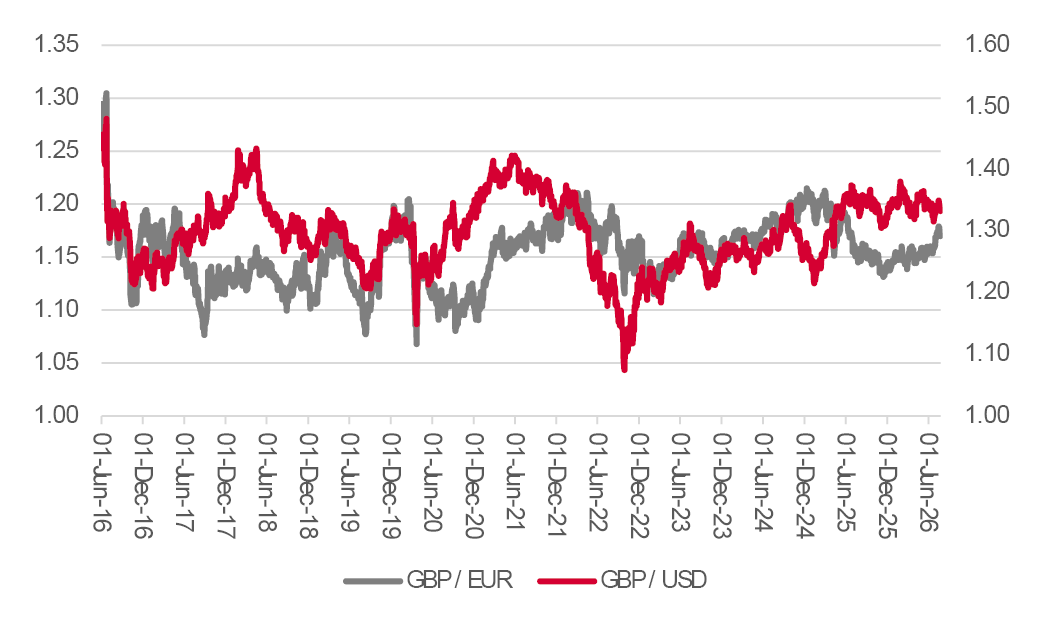
The pound is still yet to return to the levels seen before the Brexit vote in summer 2016, namely $1.48 and €1.3050. The electorate voted to leave the EU, but the financial markets have never really warmed to the concept, or the political and practical difficulties associated with implementing the withdrawal. Capital goes where it feels welcome, and capital seems to have taken the view that Brexit made it feel less welcome than before, with the result that markets are less comfortable owning sterling-denominated assets.
Sterling is yet to take a strong view on the new Government
Source: LSEG Refinitiv data.
The less comfortable markets are with a country’s political and economic outlook, the more they will change it to borrow (and vice-versa).
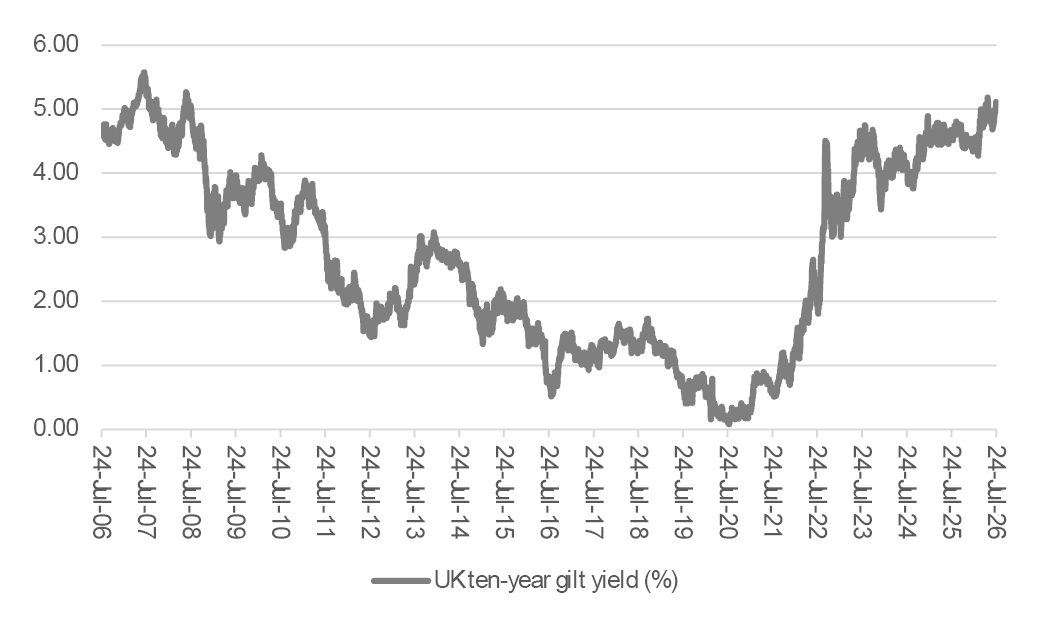
At the time of writing, the UK ten-year gilt yield is 5.11%, to leave it above 5.00% for only the fourth time since 2007. The trend in the chart suggests the yield could go higher, as markets ponder how Mr Burnham and Mr Healey intend to fund their policy agenda.
The benchmark ten-year gilt yield is rising once more
Source: LSEG Refinitiv data.
In mitigation, most governments’ borrowing costs have risen this year, and indeed fairly consistently since 2016, because interest rates have finally risen from the rock-bottom levels of the 2010s and early 2020s, in response to the inflation that followed COVID, Russia’s attack on Ukraine and now the latest Middle Eastern conflict.
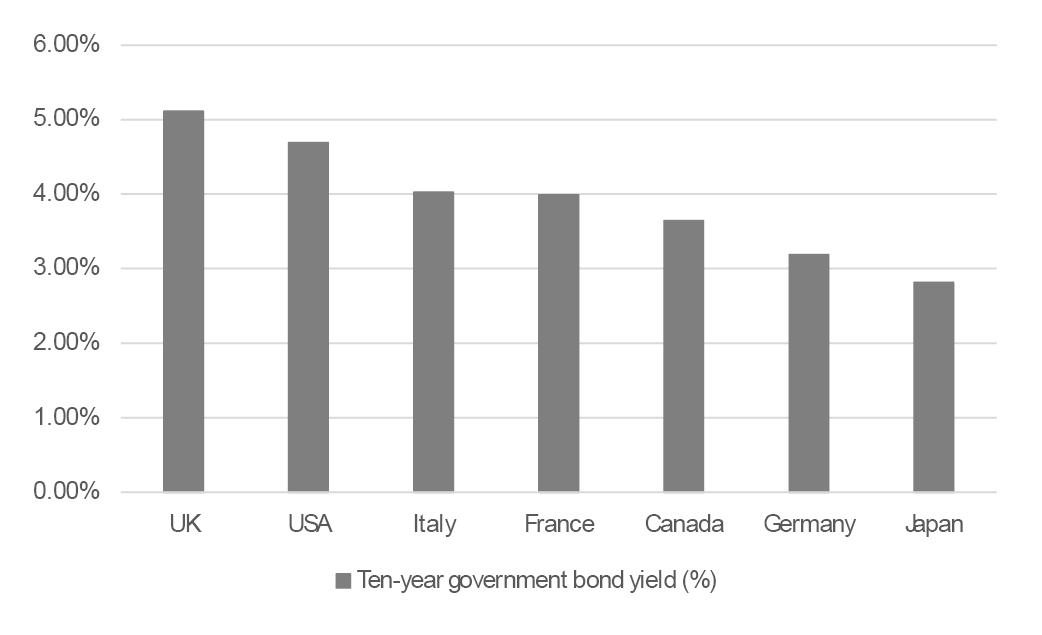
However, the challenge facing the new administration, politically and economically, is illustrated by how UK has the highest ten-year borrowing cost of any member of the G7.
The UK has the highest ten-year government bond yield in the G7
Source: LSEG Refinitiv data.
"The UK has also seen the biggest increase in ten-year gilt yields across the G7 since the June 2016 EU referendum vote."
The UK has seen the biggest increase in ten-year government bonds in the past decade
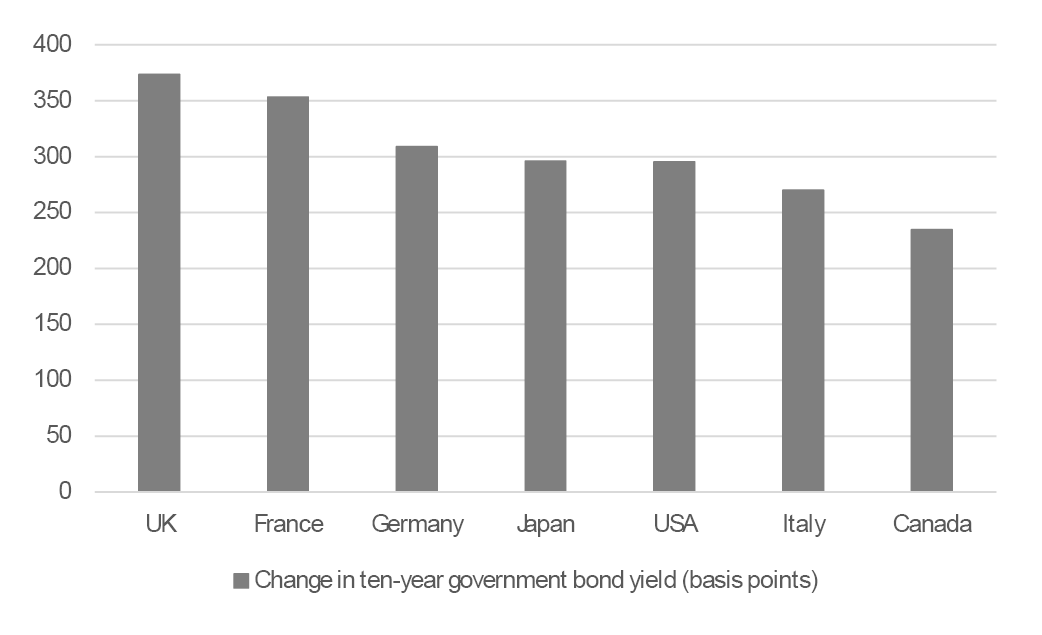
Source: LSEG Refinitiv data. Since 23 June 2016.
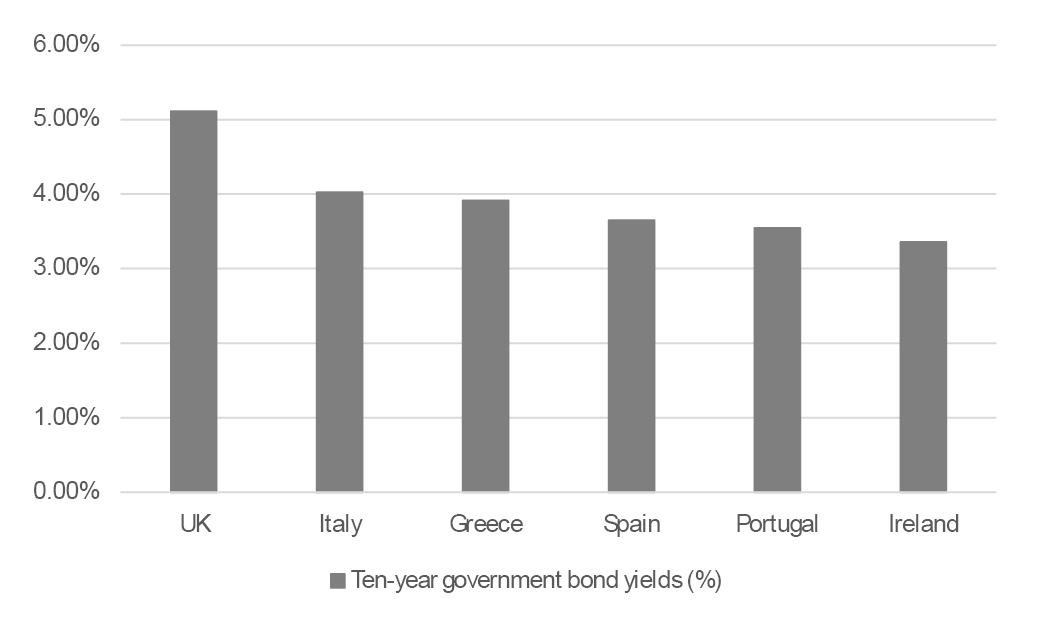
Most damningly, the yield on UK ten-year gilts is higher than the yield on the equivalent borrowing in Portugal, Italy, Ireland, Greece or Spain, the EU members whose finances were in tatters during the early 2010s amid the European debt crisis. This is not just a function of the UK’s febrile politics, given the impact of COVID, Ukraine, and Iran and more, but the UK’s brittle national finances are not helpful here, either. This can be seen in a debt-to-GDP ratio close to 100% and an annual Government interest bill of over £100 billion, more than we spend on defence and a figure that soaks up around a tenth of the revenues generated from taxation.
The UK’s benchmark ten-year borrowing costs does not compare favourably with previously distressed borrowers
Source: LSEG Refinitiv data.
Sterling and the gilt market will be key financial barometers of the new Government’s success or failure, from the perspective of advisers and clients, who also may like to judge the administration’s initial policy pronouncements and moves in the context of the nine of Mr Burnham’s fifty-eight predecessors at Prime Minister whom historian Sir Anthony Seldon describes, in his opinion, as genuinely successful ‘agenda changers’ – Sir Robert Walpole, William Pitt the Younger, Sir Robert Peel, Viscount Palmerston, William Gladstone, David Lloyd George, Sir Winston Churchill, Clement Attlee and Margaret Thatcher. Sir Anthony argues that all nine had the same four qualities in particular:
Only time will tell if he fits the bill, but without those four, Sir Anthony Seldon’s work suggests, Mr Burnham has little chance of achieving much of his political and personal agenda.
Past performance is not a guide to future performance and some investments need to be held for the long term.



This area of the website is intended for financial advisers and other financial professionals only. If you are a customer of AJ Bell Investcentre, please click ‘Go to the customer area’ below.
We will remember your preference, so you should only be asked to select the appropriate website once per device.