UK government bond, or gilt, yields continue to rise inexorably, for all that Prime Minister Andy Burnham and Chancellor of the Exchequer John Healey continue to make all of the right noises by targeting growth while trying to avoid grandiloquent and expensive-sounding promises. All eyes are now focused on the Budget, scheduled for 28 October, to see what the fledgling administration will offer when it comes to spending and the funding of that investment.
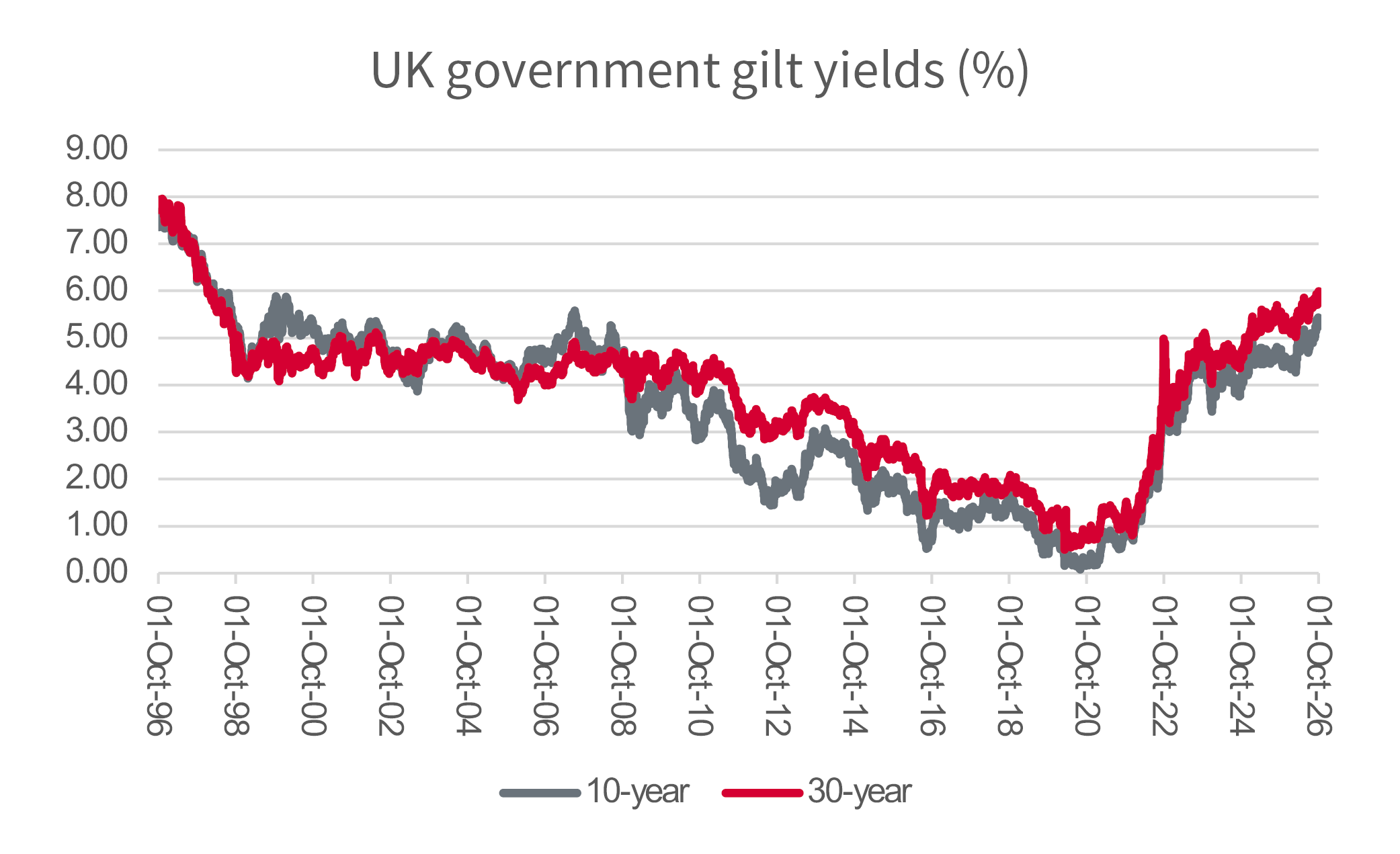
Confronted by sticky inflation, an annual budget deficit of some 5% of GDP, and an aggregate deficit that represents 95% of total output, bond vigilantes are demanding higher returns in compensation for the dangers they see here. As a result, the benchmark ten-year gilt yield stands at levels last seen in 2008, while the thirty-year paper stands at 6% for the first time since 1998.
UK gilt yields continue to creep higher to multi-year highs
Source: LSEG Refinitiv data
The question now for advisers and clients is whether those yields are tempting enough to persuade them to increase their strategic portfolio allocations to gilts, perhaps at the expense of equities, in the UK or elsewhere.
It is possible to argue that this increase in UK gilt yields is nothing more than a return to something akin to ‘normal,’ after the aberration of the post-Great Financial Crisis era, when central bank policies intentionally repressed returns on cash and bond yields alike from 2008 until the turn of this decade.
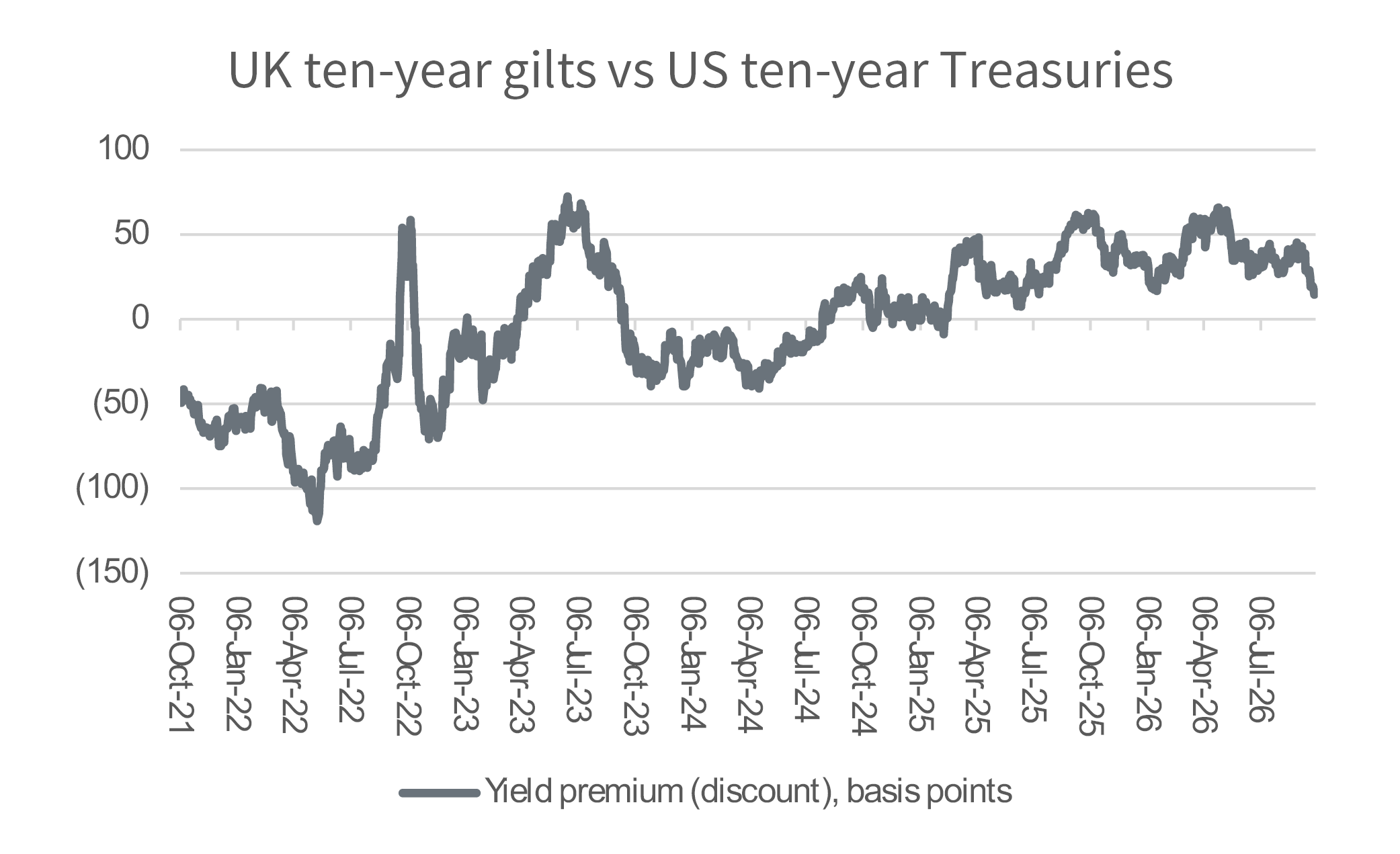
The picture may not be as black as it seems for other reasons:
UK bond yield premium relative to the USA is shrinking
Source: LSEG Refinitiv data
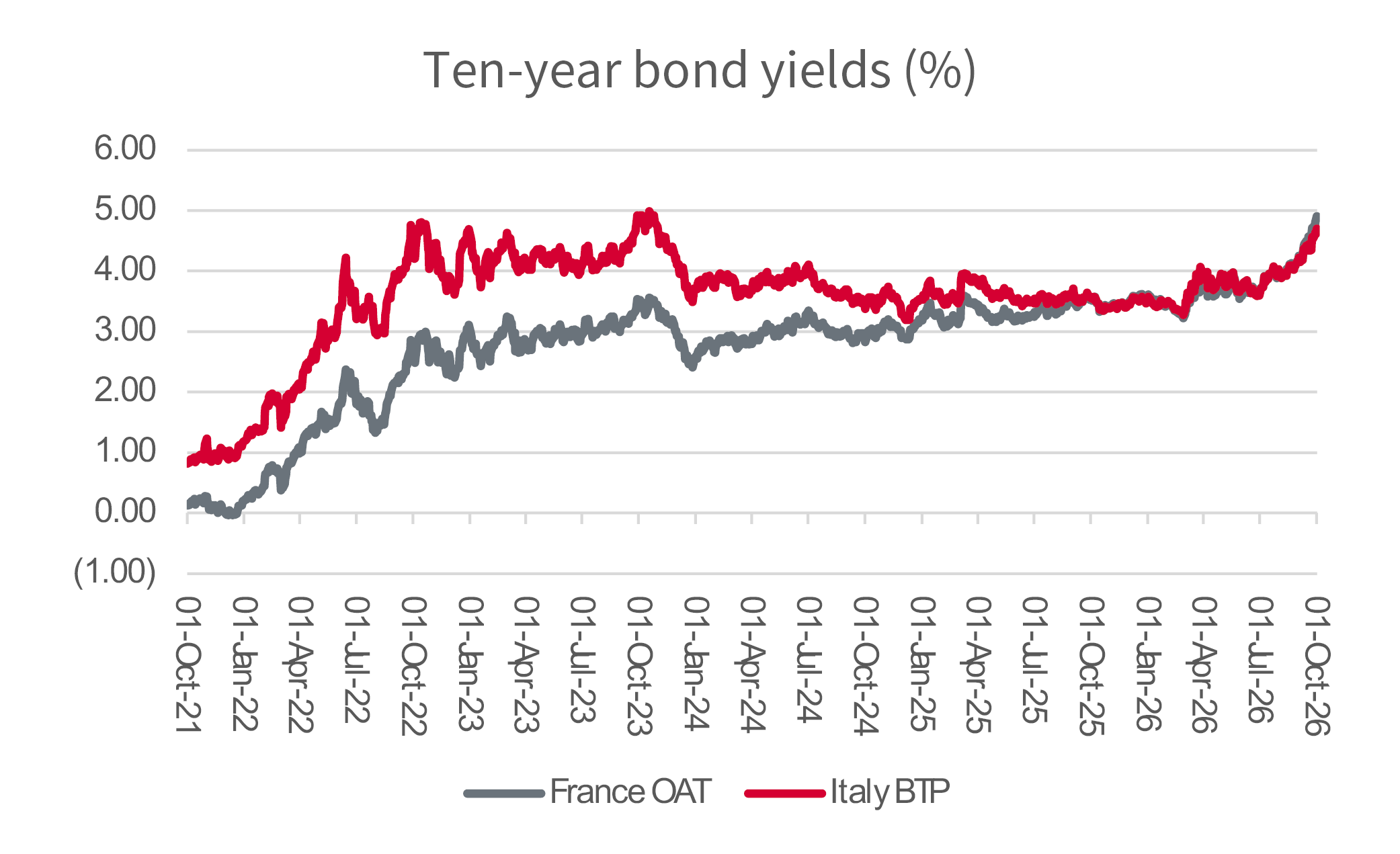
The yield on benchmark French OATs is soaring
Source: LSEG Refinitiv data
Whether that bleak background makes gilts more or less attractive from a bond allocation and yield points of view is something only advisers and clients can decide for themselves.
Some may feel that the 5.40% yield available on 10-year gilts is attractive, firstly if they are seeking income, and especially if they feel that return is sufficient compensation for the potential dangers posed by inflation, interest rate movements, default, and liquidity.
Such a view has potential implications for UK equities, though.
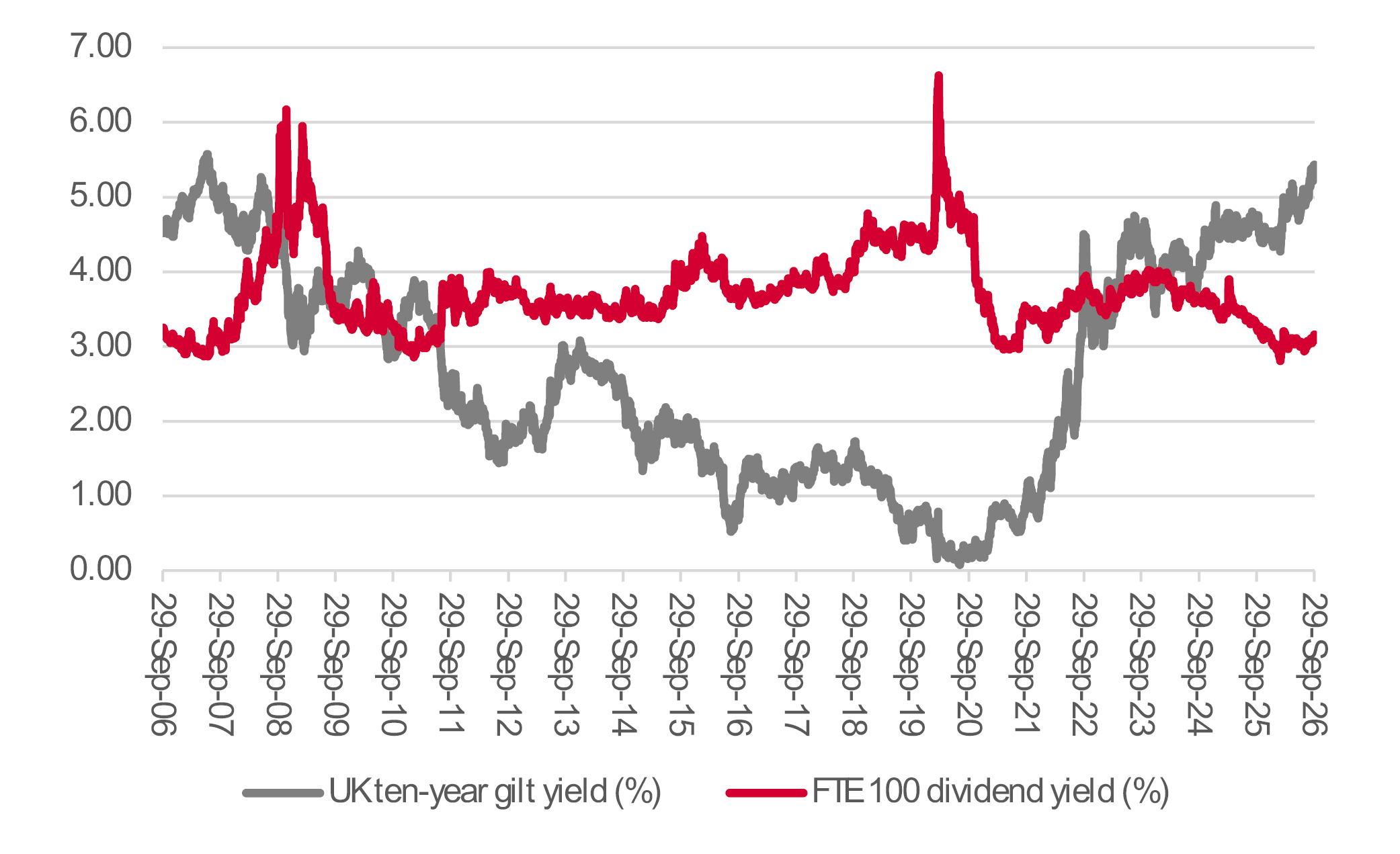
The gap between the benchmark ten-year gilt yield and the forecast dividend yield on the FTSE 100 is now more than two full percentage points, based on aggregated consensus forecasts for all of the stock market index’s members. That is the biggest premium on the ten-year gilt since summer 2007 and could tempt any adviser or client who is nervous about the economic outlook and feels that inflation is not about to break out to the upside, especially if they feel that any market dislocation will see the Bank of England turn to QE and financial repression once more.
The ten-year gilt now offers a hefty premium yield compared to the FTSE 100
Source: LSEG Refinitiv data
The FTSE 100 does offer additional sources of cash returns
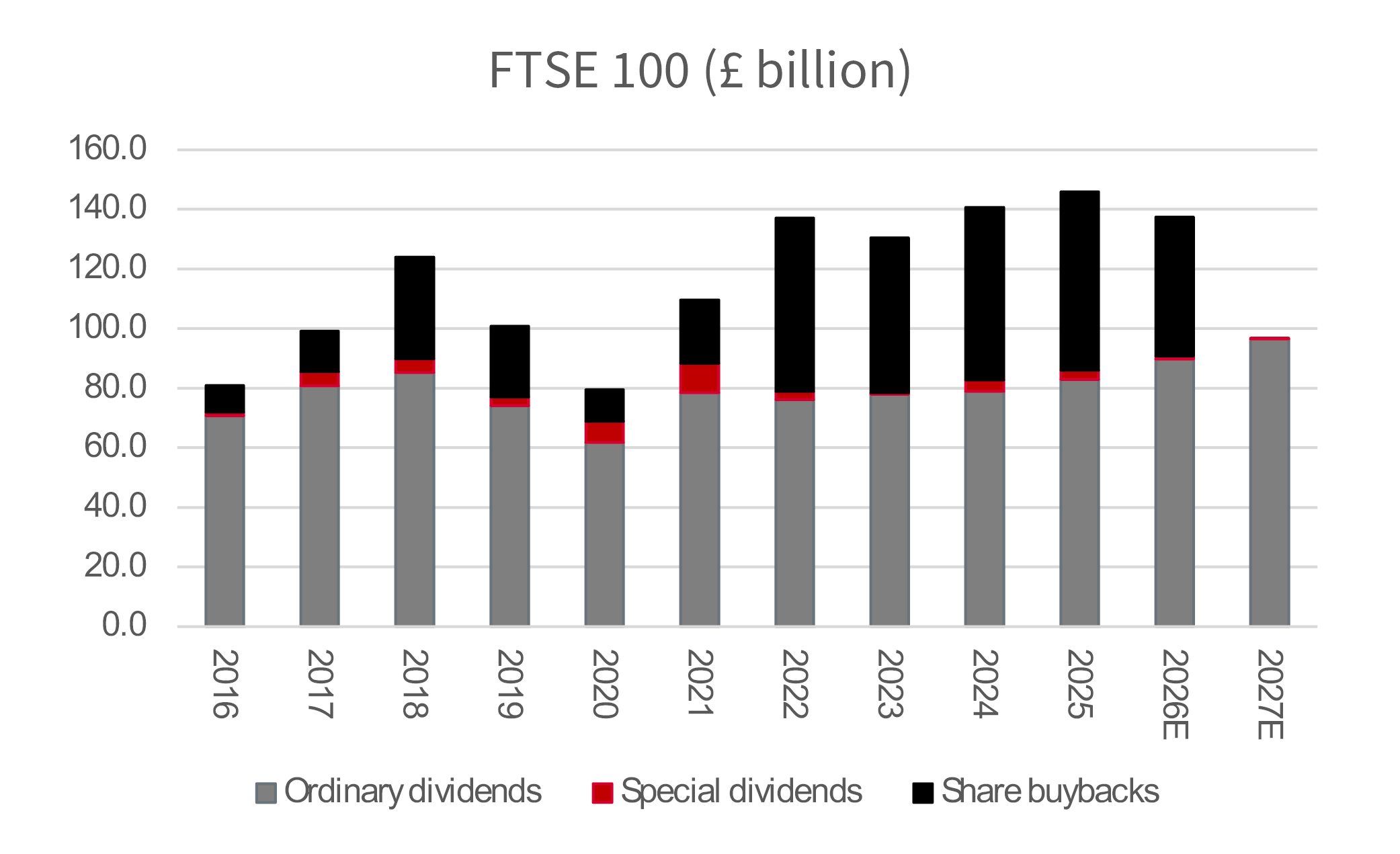
Company accounts, Marketscreener, analysts’ consensus forecasts
Weight and the handicapper can stop even champion thoroughbred racehorses, and higher interest rates eventually slow down, or halt, share prices and equity indices, at least if history is any guide.
The tricky bit is no-one quite knows what the trigger level may be, in terms of relative yields and valuations. With gilt yields as they are, the price (or multiple) in the price-to-earnings (PE) ratio may not rise much from here, so the upside in UK equities may have to come from earnings growth, where analysts do remain optimistic, given forecasts for profit increases of 9% and 6% respectively in 2027 and 2028.
Past performance is not a guide to future performance and some investments need to be held for the long term.



This area of the website is intended for financial advisers and other financial professionals only. If you are a customer of AJ Bell Investcentre, please click ‘Go to the customer area’ below.
We will remember your preference, so you should only be asked to select the appropriate website once per device.