Reports that ChatGPT owner OpenAI might temporarily put its IPO (initial public offering) on ice paints a different picture to the euphoria around SpaceX’s listing in June. If true, it could make other companies take a more cautious approach towards IPOs until they feel market conditions are more favourable.
It could stop the IPO momentum seen in the US in its tracks and potentially spread to European markets, which continue to be short on new listings.
According to reports, what’s spooked OpenAI’s advisers into suggesting the company delay its IPO is the volatility in SpaceX’s share price post-listing.
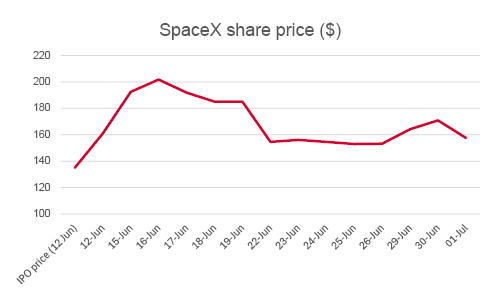
Source: LSEG, market closing price (apart from IPO offer price)
Elon Musk’s rockets-to-satellites group enjoyed a solid first few days on the market but then fell 16% in a single session amid market volatility.
While that is an extreme moment, it is common to see stocks pull back after a successful market debut, as short-term traders take profits. Certain people will have bought SpaceX with the hope of making a quick buck, and they never had any intention of being a long-term holder.
The decisive test for the health of the IPO market will be Anthropic and whether it proceeds with a listing this year. The market always expected Anthropic to debut ahead of OpenAI and there has been speculation that it might list in early autumn.
Small business software group Visma is the big name everyone expects to join the UK stock market, and it would be London’s biggest tech float in a long time. Do not hold your breath.
The $19 billion company sits in a part of the tech world derailed by something dubbed the ‘SaaSpocalypse’. This is the idea that software-as-a-service companies could become less relevant in an AI world. Investors fear modern technology will cause considerable disruption by performing tasks these businesses have historically done, judging by how share prices have slumped in this part of the market.
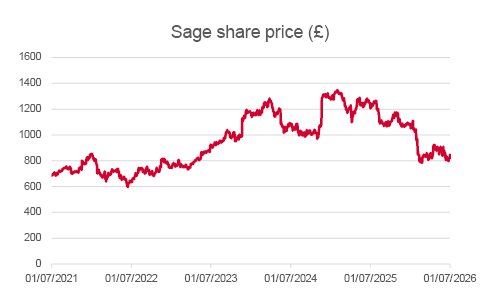
Source: LSEG
Shares in enterprise software provider Sage are down by a quarter year-to-date as it is a prime example of a company deemed by the market to be at risk from AI. Its shares have yet to recover from the January and February sell-off, which suggests ongoing investor worries. Visma operates in the same space as Sage, and may not want to float in the UK until market sentiment improves.
While not directly in the same space, Bending Spoons’ well-received IPO on 1 July offers hope that investors are still interested in the broader software sector. Its shares jumped by 40% on the first day of dealings as the Italian technology group struck a chord with investors. Its model is to buy struggling businesses, strip out costs and find ways to reignite earnings growth.
There were only four IPOs on the London market in the first half of 2026, excluding international listings that use global depositary receipts. These were all tiny companies, with an average £22 million market value. The US was busier with 185 IPOs in the first half of the year, 10 of which have delivered more than 50% return so far.
London Stock Exchange has a major challenge in trying to attract companies to float in the UK. Companies are staying private for longer because there is increased appetite among institutional investors to back businesses at an earlier stage. The pool of backers has got bigger, spreading across private equity, venture capital, investment trusts, and more.
That is why we have seen more relaxed listing rules in recent years as a way of attracting more companies to go public. The same applies to looser index rules as the likes of Nasdaq and FTSE Russell try and make it easier for companies to join major indices and benefit from tracker funds buying their stock.
Institutional investors will be acutely aware of substantial value uplift potential before a company joins a stock market, hence why they are prepared to take higher risks. Even if some of these investments don’t work out, it may only take one or two big wins to make it worthwhile.
Going public brings extra responsibilities such as regular reporting and having to commit time to speaking with investors, analysts, and journalists. Certain companies do not want that hassle, so they are happy to stay privately-owned.
The increased availability of private funding means they do not have to rush to float on a stock market. After all, a key reason companies have historically listed is to access the capital markets, and now there is less of a pressing need to do so.
Being a public company brings with it a requirement to adhere to high governance standards and be at the mercy of shareholders who have a say on remuneration. Private companies might want to have more generous management incentives than found with a public company. There is also the issue of wanting to stay out of the spotlight and not let competitors be able to drill into your reports and accounts.
These points might suggest IPOs could become less common – but do not overlook the benefits of being a listed entity. Certain companies have talked about a boost to their reputation from being on the stock market. The media mention them more, and their accounts are more transparent – which can increase confidence among customers, suppliers, staff, regulators, and investors. Being on a stock market is a badge of honour.
Book seller Waterstones, roadside rescue operator RAC, and Superdrug owner AS Watson are among the names rumoured to be seeking a London listing, which suggests all is not lost for IPOs.
On a wider scale, even if OpenAI’s float does not happen until 2027, any delay does not spell the end of IPOs. Setbacks are par for the course with markets and investing.

Past performance is not a guide to future performance and some investments need to be held for the long term.



This area of the website is intended for financial advisers and other financial professionals only. If you are a customer of AJ Bell Investcentre, please click ‘Go to the customer area’ below.
We will remember your preference, so you should only be asked to select the appropriate website once per device.