The list of company directors selling more than £1 million of shares since Labour got into power three months ago is growing. It’s as if they can see the writing on the wall regarding a potential hike to capital gains tax at the Budget on 30 October.
By crystalising value from their investments now they can avoid handing over more of their wealth to the taxman should we see substantial changes to the system.
Since the general election on 4 July, Next chief executive Simon Wolfson has disposed of £29 million worth of shares, Wetherspoon founder and chair Tim Martin has cashed in £10 million of stock, and Robert Perrins who runs housebuilder Berkeley has offloaded £10 million of equity in the business, among others.
Examples of £1m+ director sales since UK general election in July 2024
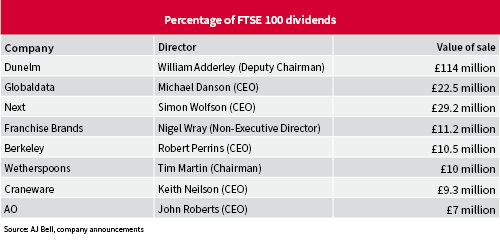
Source: AJ Bell, company announcements
While it is easy to suggest their disposals are purely down to tax planning and speculation around the content of the Budget, it’s a good reminder to always consider why a director is selling down their holding.
Over the years director dealings have sent an important signal to the market. A chief executive, finance director or chief operating officer should know everything that’s going on in a business because they see the sales figures, monitor costs and see various key performance indicators. They will know if a company is achieving its objectives or not.
Non-executive directors’ share dealings are also worth following as they will attend board meetings and have valuable insight into the opportunities and threats, even though they may not have the granular detail on day-to-day operations.
If a director is buying stock, it can suggest that everything is going well with the business and they see value at the current price.
Likewise, directors selling shares can also send a signal to the market about the potential prospects for a company. If the boss is cutting their holding, does that imply things aren’t going well? It can certainly look that way.
A significant share sale can indicate something is amiss, with a downswing in both the company fortunes and the share price potentially on the cards. Alternatively, the director might feel the market has overvalued the company and the shares might be heading for a fall.
There can be a perfectly logical reason for a share disposal which has no reflection on the state of the business. For example, a director might be raising cash to buy a house or to fund a divorce settlement. Deliveroo said in September that its chief executive Will Shu had sold £14.8 million worth of stock ‘to cover personal property investments’.
You often see directors sell shares when they’ve received stock as part of a bonus payment, where they are selling to raise enough money to pay the associated tax bill.
Unfortunately for investors, most companies do not reveal the reasons behind director share purchases or sales. At best, you might occasionally get a comment about selling to meet demand for stock from institutional investors or for estate planning purposes – you’ll never get such a comment if the director is worried about the outlook as such actions could spark widespread selling on the market. Each investor needs to dig deeply into a company’s most recent trading updates and results to spot any worry signs.
It is important to stress that director share buying and selling isn’t a signal for other investors to copy them. Instead, you should consider their actions as part of deeper research into a business.
Directors can only buy or sell at certain times of the year. They cannot deal in a closed period which is when financial accounts are being prepared. They also cannot buy or sell if there is undisclosed inside information, such as news of a possible takeover or a major contract win or loss.
A director buying stock after a big rally in the share price, or investing in the shares after joining the board, sends a strong signal to the market that the person is confident about a company’s prospects.
Equally someone selling after a slump in the share price doesn’t show faith in a company’s position, although these situations are not always black and white.
Certain directors buy stock for a perfectly logical reason. For example, a new chief executive of a FTSE 100 company often has a clause in their employment contract that they must buy a certain value of shares to align their interests with shareholders.
Companies must report directors’ buys and sells to the stock market so it is easy to find out who is doing what, even if the rationale behind the trade remains private. Investors should scrutinise the daily stock market announcements headed ‘Director/PDMR Shareholding’, then scroll down to the ‘Nature of the transaction’ heading. Here you will find out whether the shares bought or sold were via dealings in the open market or relate to the exercise of share options.
The significance of share deals in relation to the number of shares held by a director is always relevant. For example, a purchase of 20,000 shares by a chairperson who owns more than a million shares may not be that important. However, the finance director doubling their holding of 20,000 shares is a different matter. In an equivalent way, the sales director selling 20,000 shares out of a holding of 25,000 would not be a good sign.
It's important to be alert to whether directors are buying shares just to give the impression everything is fine when it might not be. Sometimes when companies are known to be in trouble, a cluster of directors buy shares to try to reassure the market that all is well.
As for the latest flurry of share sales in excess of £1 million, it is logical directors would try to get ahead of potentially substantial changes to capital gains tax rules by crystalising gains in their shareholdings, and that these transactions might not be a signal for investors to worry.
The wave of selling could continue for another five months. Should the Chancellor confirm the speculated changes, we might not see the new rules come into force until 6 April 2025 when the new tax year begins. That could lead to more selling by directors in the market to beat the deadline which could see shares in certain companies temporarily depressed, creating a potential buying opportunity for other investors who are confident in the long-term prospects.
Past performance is not a guide to future performance and some investments need to be held for the long term.



This area of the website is intended for financial advisers and other financial professionals only. If you are a customer of AJ Bell Investcentre, please click ‘Go to the customer area’ below.
We will remember your preference, so you should only be asked to select the appropriate website once per device.