In a nutshell, these businesses have got their act together and investors have revelled in the rewards.
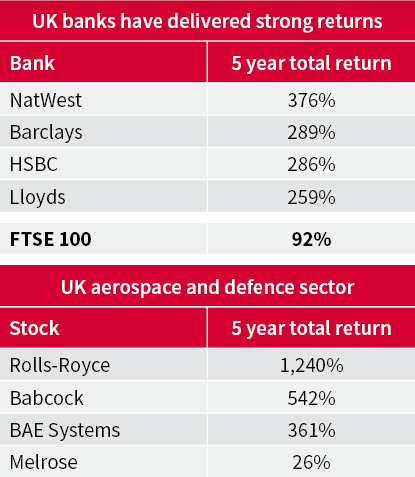
Source: ShareScope. Data to 29 January 2026
Strong investment returns represent a renaissance for banks after a decade in the doghouse following the global financial crisis in 2008, which required them to rebuild their beaten up balance sheets. The past five years have also witnessed a radical change in the interest rate environment, driven by the Bank of England hiking rates from virtually zero before the pandemic to a high of 5.25% in 2023.
This pushed up interest rates across the yield curve, providing a positive tailwind for the sector. The yield curve represents the cost of borrowing over different terms, from a few months to 30 years, and normally slopes upward. For example, two year interest rates are approximately 3.6% while 10 year rates are 4.5%. This spread allows banks to generate a positive net interest margin between lending rates and the interest paid on deposits.
As rates normalised post 2020 toward a typical upward sloping curve, net interest margins fattened significantly, resulting in record breaking profits for the sector in 2024. Banks also benefited from typically passing on higher rates to savers with a lag while increasing lending rates immediately.
UK banks actively manage interest rate risk and typically use five year rolling hedges to smooth income. Hedges put on during the period of ultra low rates in 2020 matured during 2024 and 2025, giving banks an opportunity to put on new hedges at today’s higher rates of between 4% and 5%.
Analysts believe this could support income by protecting net interest margins over the next few years, even if the Bank of England cuts rates.
After many years of rebuilding capital buffers following the global financial crisis, capital ratios across the sector are now healthy. Tier one capital ratios average 17% across the sector. These measure a bank’s core financial strength, comparing equity capital to total risk weighted assets.
UK banks must meet the Bank of England’s 13% benchmark, which considers extra buffers for tougher economic times. The Bank of England has estimated that UK banks have tier one capital headroom equivalent to about 2% of risk weighted assets. This strong position has allowed the sector to shift from hoarding cash to aggressively returning capital via share buybacks and dividends. The six largest UK banks announced or distributed £36 billion of dividends and buybacks in 2024, according to S&P Global Ratings.
Healthy dividend yields and aggressive share buybacks have attracted value and income investors. Banks are a key reason the FTSE 100 has done well over the past year, and why sentiment is improving towards the UK stock market. Another year of strong returns could further lift sentiment and support the Government’s aim to get more people investing. Many new investors start with familiar brands, and banks are a natural fit.
Past performance is not a guide to future performance and some investments need to be held for the long term.



This area of the website is intended for financial advisers and other financial professionals only. If you are a customer of AJ Bell Investcentre, please click ‘Go to the customer area’ below.
We will remember your preference, so you should only be asked to select the appropriate website once per device.