Chancellor John Healey will present his inaugural Budget on 28 October.
This Budget matters hugely for millions of people saving into pensions and ISAs. The decisions the Government makes today will shape their ability to build financial security tomorrow. Investors need stability, clear incentives and confidence that long-term investment will be rewarded, not repeatedly disrupted by policy changes.
The challenge for Healey is balancing the Government’s fiscal books. He has committed to following the fiscal rules laid out by his predecessor Rachel Reeves, as well as abiding by Labour’s general election manifesto not to increase tax rates for working people.
But those promises leave him little wiggle room, when the Budget headroom is fast disappearing under Andy Burnham’s wish list for change, such as a ‘National Care Service’ and renationalisation of utilities.
Healey may have little choice but to raise receipts from other taxes. But any Budget tax changes affecting pensions, ISAs or investment incentives risk undermining confidence, and could impact some people’s long-term plans.
The state pension has recently been in the spotlight. Andy Burnham plans that from 2030 the triple lock will be adjusted, with the new state pension and basic state pension rising by the highest of 2.5% or inflation, subject to an additional check against a smoothed average increase in earnings.
Next April the state pension is expected to rise above the personal allowance for the first time. The Government has promised that the lowest earners will not pay tax on their new state pension. But the detail is still unclear. We will have to wait until the Budget to see who benefits from this promise – and who doesn’t.
There are major changes coming in the new tax year when unused pension funds will be brought into the inheritance tax (IHT) net. But speculation about further pension changes risks doing real damage. We have seen the real-life consequences play out over the past two years when rumours about the future of tax-free cash helped drive tax-free cash payments up by £14 billion compared with the average prior to the last election.
Aligning CGT rates with income tax rates would be a significant change for investors and entrepreneurs, and one that the Treasury would need to approach carefully. Higher CGT rates would affect the way people make investment decisions, the willingness to back businesses, and the incentives for people to build long-term wealth outside pensions and ISAs.
There is no certainty it would be a nailed-down revenue raiser either. Whilst some argue it could raise up to £14 billion, others are doubtful it will raise anything like that figure. For some people, CGT is a voluntary tax, and if they don’t need to sell their asset, they may choose to instead wait in the hope rates fall again.
As Budget date edges closer, Chancellor Healey is remaining tight-lipped over how his plans are shaping up.
With no leaks from Number 11, some are speculating Healey could target the wealthy through a ‘wealth tax’. But exactly how it would work in practice remains clouded in mystery.
Others are ruminating over possible cuts to IHT rules and allowances. Recent AJ Bell research* shows almost three-in-five (57%) advisers cited these measures as clients’ biggest concerns ahead of the upcoming Budget.
The other biggest client concerns ahead of the Budget are shown below:
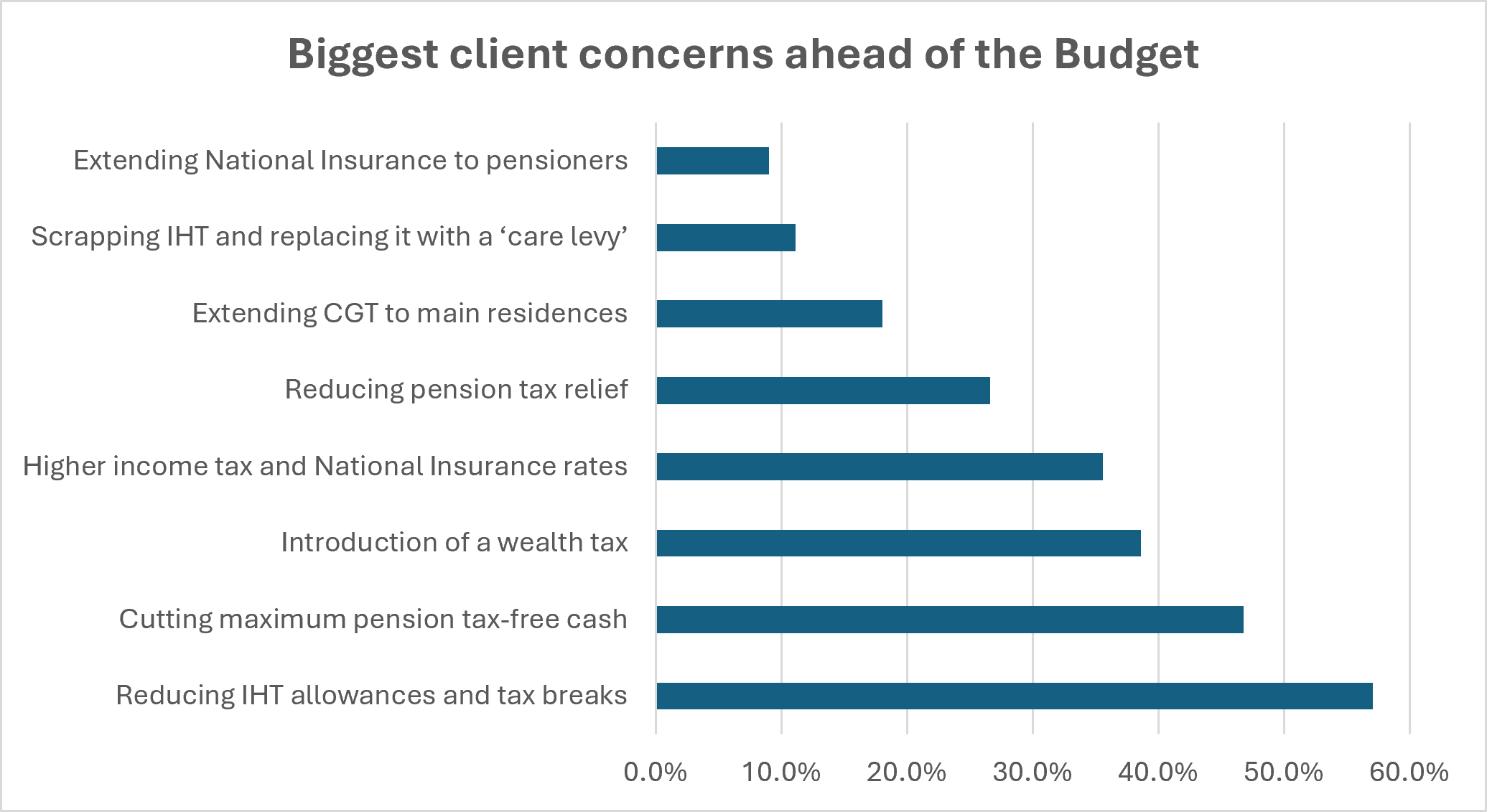
* Source: AJ Bell. Survey of 233 financial advisers attending AJ Bell’s Great Wrapper Reset Tour across 10 UK locations between 7 and 22 September 2026.



This area of the website is intended for financial advisers and other financial professionals only. If you are a customer of AJ Bell Investcentre, please click ‘Go to the customer area’ below.
We will remember your preference, so you should only be asked to select the appropriate website once per device.