Chancellor John Healey’s first Budget brought a rolling back of the changes announced earlier this year to the cash ISA, a further hike in savings and property tax rates, and a new founders’ relief for entrepreneurs.
The Budget also brought some clarity on the new rules for income tax in relation to state pensions, and the promise of two new ISAs – the First Time Buyer ISA to replace the lifetime ISA, plus a new feature aimed at encouraging first-time investors.
Here are the policies announced in the Budget that are likely to most impact you and your clients.
Healey announced a rollback of cash ISA changes, reverting to the current set-up which allows the full £20,000 ISA allowance to be invested solely in a cash ISA, instead of the proposed £12,000 limit that was scheduled to come into play in April 2027.
Although confirmation is still outstanding, the expectation is that the anti-circumvention rules proposed for non-cash ISAs will also disappear. Advisers and their clients were preparing for new rules on non-cash ISAs banning transfers to cash ISAs for the under 65s, as well as a 22% charge on interest paid on cash held, and not allowing 100% of the investment portfolio to be held in Money Market Funds.
Income tax on savings interest was already set to increase by two percentage points in April 2027 but will now increase by a further two percentage points for income on savings interest or property across all income bands.
The allowances for savings interest will remain the same, at £1,000 for basic rate taxpayers, £500 for higher-rate taxpayers, and no allowance for additional-rate taxpayers.
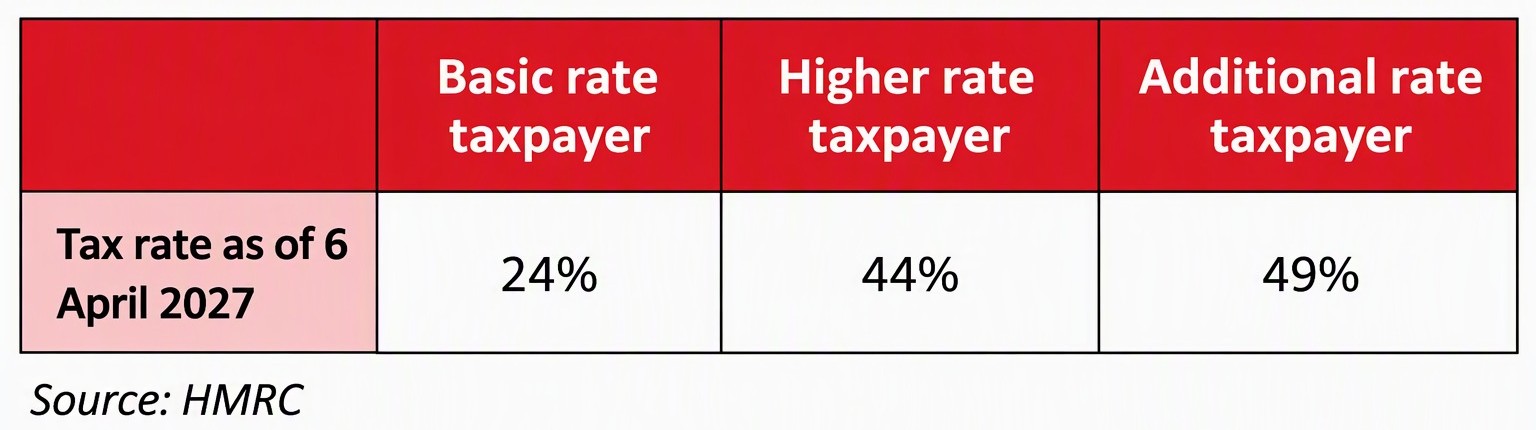
Following the increases, the income tax rates on savings interest beginning April 2027 will be 24% for basic rate taxpayers, 44% for higher rate taxpayers and 49% for additional rate taxpayers.
For someone with £1,000 of savings interest above their tax-free allowances, the hike to savings rates from April will cost an extra £40 a year compared to current rates. Someone with £5,000 of taxable savings interest would pay another £200, while those with £15,000 of savings interest a year would face an extra £600.
The tax increase in pounds and pence is the same regardless of someone’s tax band, however higher-rate and additional-rate taxpayers will see their total bills rise to £2,200 and £2,450 respectively on £5,000 of taxable interest.
“The cumulative effect will be seen over a number of years,” AJ Bell Director of Personal Finance Laura Suter says.
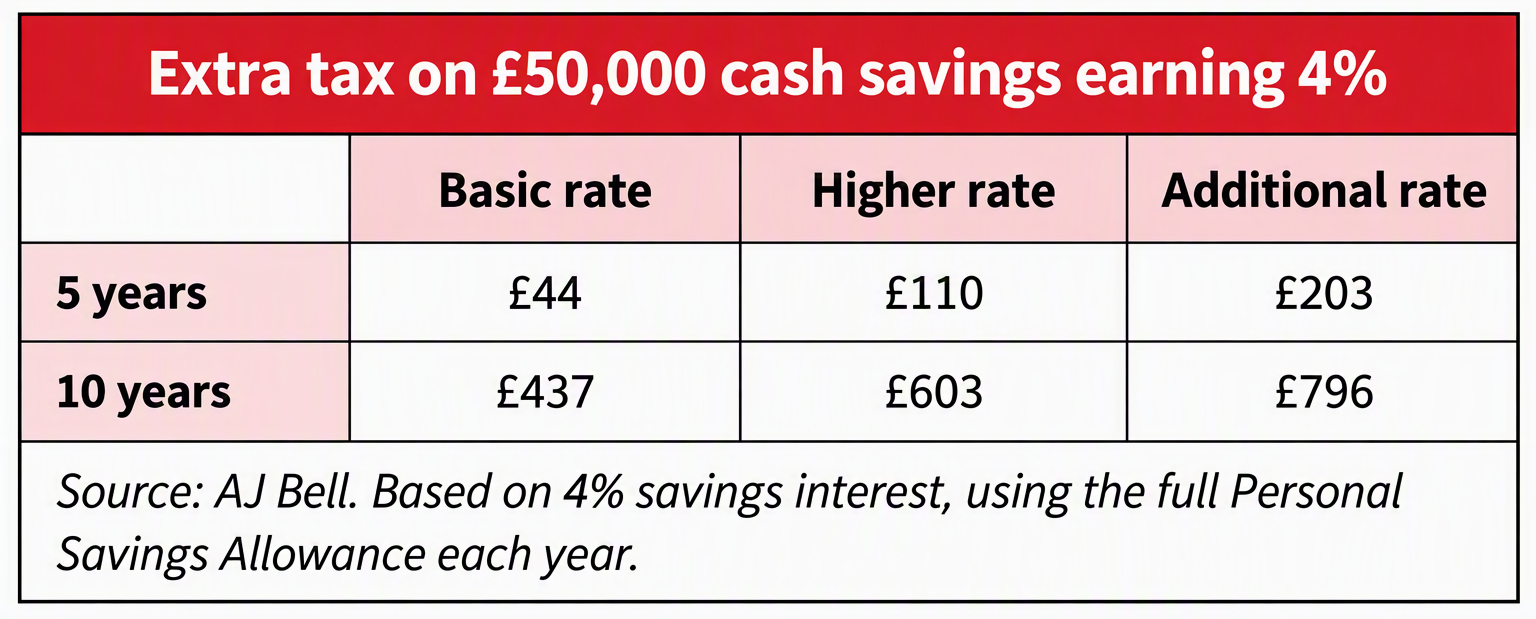
“A higher-rate taxpayer with a £50,000 savings pot earning 4% interest will face £603 more tax over 10 years thanks to the tax increase. For a basic-rate taxpayer with the same amount saved, this will be £437 in extra tax across that period.”
Although savings and property tax rates are increasing, dividend tax rates will stay the same, meaning that there could be up to a 13 percentage point difference in rates between the two.
Although the Business Asset Disposal Relief lifetime limit will halve to just £500,000, and new type of relief – founders’ relief – will be introduced, offering a 10% capital gains tax (CGT) rate on lifetime gains of up to £10 million.
Although this could be encouraging, we still need to comb the final detail to work out exactly who would benefit, and importantly, which entrepreneurs won’t fit the eligibility criteria to claim it.
Two new ISA types could potentially be introduced over the next few years.
The First Time Buyer will replace the lifetime ISA from April 2029. The maximum payment in will be set at £4,000, and ISA account holders will be awarded a bonus when they exchange to buy the property. A bonus of 25% will be paid on the amount used to buy the property, up to a maximum of £20,000.
The maximum property price will disappointingly remain at £450,000, the current level for the lifetime ISA. Unlike the lifetime ISA, which must be opened before age 40 with contributions allowed until 50, the new ISA will have no upper age limit.
From 29 October, the lifetime ISA withdrawal penalty for buying a home above £450,000 will fall from 25% to 20%, removing the Government bonus without eating into savers’ contributions. Withdrawals for other purposes will still face the 25% penalty.
The Treasury also wants to explore with the industry a new incentive for those taking their first dive into investing through a new ‘Starter ISA’.
“The prize for both individuals and the UK economy of getting ISA reform right could be significant,” says AJ Bell Director of Public Policy Tom Selby.
“HMRC data suggest there are around three million people in the UK with £20,000 or more invested in cash ISAs and no money invested in stocks & shares ISAs. If just half of that money was invested for the long term, an additional £30 billion of investment would be unlocked.”
While incentives are helpful, if the Government moves forward with a new ISA, it could add another layer of complexity to a system which has already seen significant tinkering. AJ Bell has advocated for simplifying ISAs to a single ‘One ISA’ that encompasses both cash and investing.
The Government confirmed that pensioners with an income at or below the full new state pension will not face income tax. The state pension is set to top £13,000, above the current personal allowance value of £12,570, during the 2027/28 tax year.
The Budget also mentioned the ‘adjusted’ Triple Lock announced in early October. It estimates the changes, coming into play in 2030, will reduce state pension spending by £15 billion a year by the late 2030s and £50 billion in the 2040s. The plan for this change is that the state pension will be adjusted from April 2030 so that it rises each year ‘by the highest of 2.5%, inflation, or the amount required to maintain its value relative to earnings as reached in April 2029’, according to HM Treasury.
The Treasury has also announced a few other changes to pensions:



This area of the website is intended for financial advisers and other financial professionals only. If you are a customer of AJ Bell Investcentre, please click ‘Go to the customer area’ below.
We will remember your preference, so you should only be asked to select the appropriate website once per device.